


The Silent Life
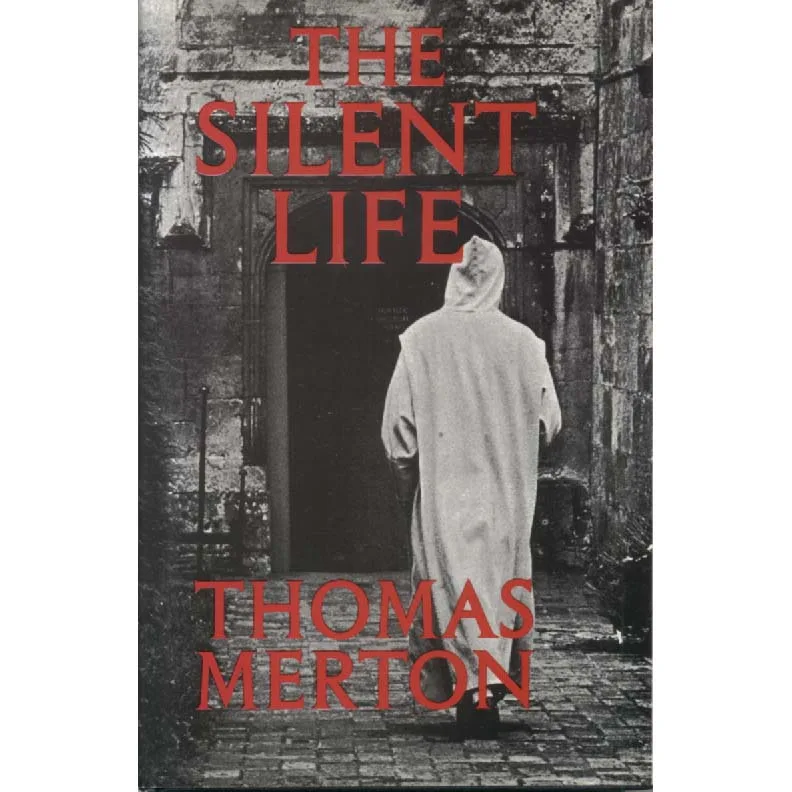
Publisher: The Catholic Book Club
Format: Hardback
ISBN: none
The Catholic Book Club | Hardback | ISBN: None | Condition: Good
Sold by Crappy Old Books – Where Silence Is Golden, Contemplation Is Admirable, and the Bookseller Is Unfortunately Still Talking.
There are people in this world who cannot endure five minutes without making a noise. They turn on the television while eating breakfast, listen to the radio while driving, and spend their evenings watching other people shout at one another about things that neither party properly understands. Then there are monks, who have somehow arrived at the extraordinary conclusion that the best way to improve human existence is to stop talking, withdraw from the general chaos, and devote themselves to God.
Thomas Merton, celebrated Trappist monk, spiritual writer and one of the twentieth century’s more thoughtful observers of mankind’s peculiar behaviour, explores this second approach in The Silent Life. Originally published in the 1950s, this 1975 Catholic Book Club edition offers a fascinating introduction to the contemplative monastic tradition: a world of prayer, solitude, disciplined labour and an almost suspicious absence of pointless conversation.
For anyone who has ever attended a committee meeting, endured a neighbour’s opinions about parking arrangements, or found themselves trapped beside a particularly enthusiastic conversationalist on public transport, the monastic life may immediately seem rather attractive.
But Merton is not suggesting that monasteries are simply convenient refuges for people who dislike their relatives. His subject is considerably more profound: the spiritual purpose of monastic existence, the historical development of religious communities, and the extraordinary commitment required to devote one’s entire life to contemplation.
It is a commitment that rather puts our own efforts at self-discipline into perspective. Most of us struggle to go without biscuits for an afternoon. A monk may undertake a lifetime of poverty, chastity, obedience and regular prayer, with no prospect of a promotion, a company car or even a particularly exciting Christmas party.
Through his examination of monastic history and spirituality, Merton considers the traditions that shaped Christian religious life, including the influence of the desert fathers, the Rule of St Benedict and the contemplative ideals that developed within the great monastic orders. These were communities established around the proposition that withdrawal from the distractions of the world could lead to a deeper engagement with spiritual reality.
This is rather different from withdrawing from society because somebody has annoyed you on Facebook.
Indeed, the paradox at the centre of the monastic vocation is that those who apparently abandon the world do not necessarily cease to care about it. Their prayers, contemplation and spiritual discipline are understood as contributions to the wider Christian community. The monk may have little interest in the latest political scandal, but his retreat is not intended as an act of indifference towards humanity.
Merton is particularly well placed to explain such ideas, having entered the Abbey of Our Lady of Gethsemani in Kentucky in 1941. Before embracing monastic life, he had experienced considerably more of the ordinary world’s temptations and distractions than might be expected of someone subsequently committed to silence and contemplation. His spiritual autobiography, The Seven Storey Mountain, brought him international recognition, making him the rather unusual spectacle of a famous monk.
There is something splendidly ironic about becoming internationally renowned for withdrawing from public life. Most celebrities spend their entire careers desperately seeking attention. Merton attracted it by choosing a vocation in which attention was largely beside the point.
Nevertheless, The Silent Life is not a celebrity memoir, nor is it a romantic account of picturesque monasteries populated by cheerful gentlemen producing excellent cheese and occasionally ringing enormous bells. Merton takes the theological and spiritual foundations of the monastic vocation seriously. The silence he describes is not merely the absence of speech but an essential part of the contemplative search for God.
It is a silence that creates room for reflection, humility and awareness, rather than the sort encountered when a married couple have disagreed over the correct way to load a dishwasher.
The book also provides a valuable glimpse into a form of religious life that can seem especially remote from modern experience. Contemporary society measures success through activity, visibility, productivity and accumulation. The contemplative monk deliberately questions the importance of all four. His existence cannot easily be assessed through quarterly performance targets, social-media engagement or the number of professional contacts accumulated on LinkedIn.
Imagine explaining to a management consultant that your organisation has existed for centuries, that its principal objectives are prayer and spiritual development, and that increasing market share is not currently under consideration.
One suspects the resulting PowerPoint presentation would be particularly distressing.
Yet Merton’s writing suggests that there may be something fundamentally important in this rejection of conventional ambition. The monastic life asks questions about what human beings actually need, what constitutes meaningful existence, and whether the constant pursuit of more possessions, experiences and stimulation necessarily produces greater happiness.
These are questions worth considering even for readers who have absolutely no intention of becoming monks and would regard surrendering their television remote control as an unacceptable sacrifice.
For Catholics, students of theology and readers interested in Christian spirituality, The Silent Life offers an illuminating exploration of monastic ideals from a writer who understood them from within. For historians, it provides insight into the traditions and religious thinking that sustained monastic communities across many centuries. And for the merely curious, it offers an opportunity to examine a way of life whose values are almost gloriously at odds with the surrounding world.
Naturally, there are difficulties. The monastic vocation demands rather more than buying a comfortable chair, turning off the telephone and announcing that one is contemplating eternity. There are rules, obligations, routines and communal responsibilities. Silence itself, as anyone who has attempted meditation will appreciate, does not necessarily result in tranquillity. Sometimes it merely makes the noise inside one’s own head considerably more noticeable.
Merton understood that the contemplative life was neither an easy escape nor an elaborate holiday from responsibility. It was a demanding spiritual calling, requiring discipline and a willingness to confront uncomfortable truths about oneself.
Perhaps that explains why monasteries have never entirely replaced package holidays.
This 1975 edition, published by The Catholic Book Club, is also an appealing period object in its own right. It belongs to an era when serious religious books were routinely published for thoughtful readers who were quite prepared to sit down with a substantial theological argument rather than demand that the whole business be reduced to six inspirational slogans and a motivational photograph of a sunset.
The fact that this particular book has survived for half a century is itself rather appropriate. Merton writes about traditions that endured across centuries, and here is a physical volume continuing its own modest existence long after its original owner finished reading it, placed it on a shelf and presumably returned to making considerably more noise than the author recommended.
Condition: Good. This is a previously owned book with the normal signs of age and handling consistent with its description. It is not being presented as an immaculate collector’s copy, but as a perfectly respectable older edition awaiting another reader. There is no ISBN, which is hardly a catastrophe. Books managed without them for centuries, and civilisation nevertheless produced Dante, Shakespeare and an astonishing quantity of theological disagreement.
Ultimately, The Silent Life is a book about an extraordinarily unfashionable proposition: that there may be greater wisdom in becoming quieter, possessing less, expecting less applause and paying closer attention to the eternal rather than the immediate.
Whether you are a practising Catholic, a student of religious history, an admirer of Thomas Merton or simply someone who occasionally suspects that humanity would benefit from shutting up for a while, this is a thoughtful and rewarding addition to the bookshelf.
Available from Crappy Old Books, where we are pleased to offer a book devoted to the virtues of silence while simultaneously producing a quite unnecessary quantity of words in an attempt to sell it.
Thomas Merton would probably have appreciated the irony.
He might also have suggested we stop.
Keep browsing: See more Religion books Other books by Thomas Merton
